
Empowering young new Scots through cycling
A People and Place case study
Through our People and Place fund, we support Greener Kirkcaldy in Fife. In partnership with Fife Council’s English for Speakers of Other Languages (ESOL), they have delivered a targeted cycling support programme designed to foster independence, confidence, and community connection for unaccompanied refugee and asylum-seeking young people. The participants came from places like Sudan, Eritrea, Somalia, Vietnam, Cambodia, Yemen and Iran and have all been effected by conflict and climate change.
The programme engaged a group of 13 new Scots in a series of cycling activities, including confidence-building rides around town and practical workshops. For some participants, this was their first experience learning to ride a bike. Through patient instruction and peer support, several young people gained the skills and confidence to cycle independently — a milestone that brought visible joy and pride.
A key highlight was the “Build Your Own Bike” workshop, where participants learned basic bike maintenance and assembled their own bicycles. Each young person left the programme with a free, fully functional bike — a vital tool for active travel, saving money, and reducing carbon emissions.
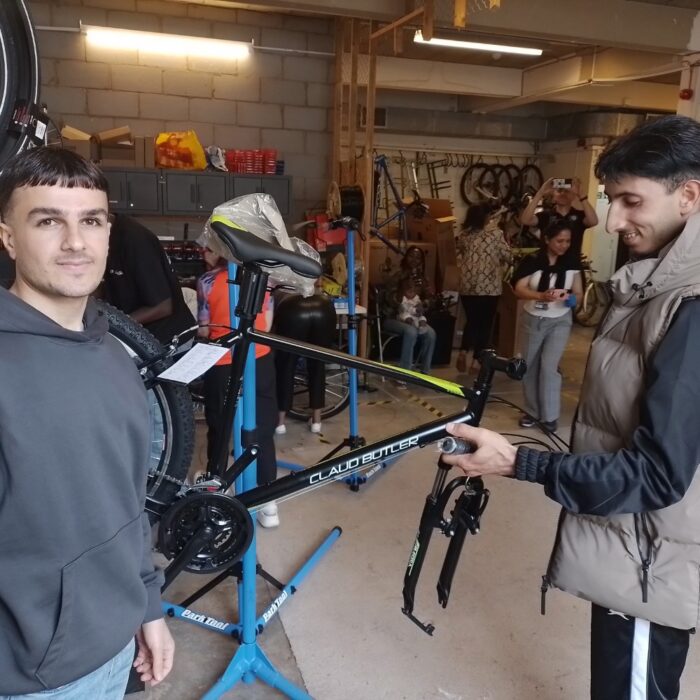 Beyond the practical benefits, the programme helped participants explore their new town, build friendships, and feel more at home in their community. Cycling became a gateway to local knowledge, personal empowerment, and environmental awareness. Here are comments from three of the participants.
“I was active, so I liked it. Now I cycle to the gym.”
“It was fun, I got to know new places.”
“I enjoyed it and I discovered new places I wouldn’t see from the bus.”
The initiative demonstrated how inclusive cycling outreach can support integration, wellbeing, and sustainability. It also highlighted the importance of removing barriers to active travel for marginalised groups.
We’re proud of the young people’s achievements and grateful to the partners and funders who made this possible. With continued support, we aim to expand this model to reach more new Scots and other underserved communities.