Freight can be something we don’t think about much. We see lorries on our roads and know there are dedicated, long distance drivers moving food and goods around the country, but that is often the end of it. In our latest blog, our Senior Project Officer, Rebecca Smith, talks about a freight project she has recently been involved in, looking at careers in the Zero Emissions Heavy Duty Vehicle sector.
I got involved in this project thanks to our previous Senior Partnership Manager, Keith Fisken, who soon after moved to Australia. With no Keith and no knowledge of freight, it was safe to say I was slightly apprehensive about working on the project. Trucks? Drivers? As a young (ish – on my last year of the youthful railcard!) woman who struggled to park her Fiat 500, the whole project felt very far away from me.
SCOT-ZED stands for Supporting Careers and Opportunity in Transport – for Zero Emission Diversity in the ZE HDV (Zero Emissions Heavy Duty Vehicle) sector. It’s a long title because it’s a complicated issue. Even trying to give this blog a title was challenging. The project was pulled together by Keith, Professor Daniella Paddeu (from the University of the West of England) and Dr Fiona Crawford (from the University of Glasgow). They were interested in the barriers to entering the HDV workforce, and specifically, how the sector could be diversified. This includes drivers, vehicle maintenance and engineering roles. Through the project, we assessed problems within the sector, workshopped potential solutions and created a roadmap.
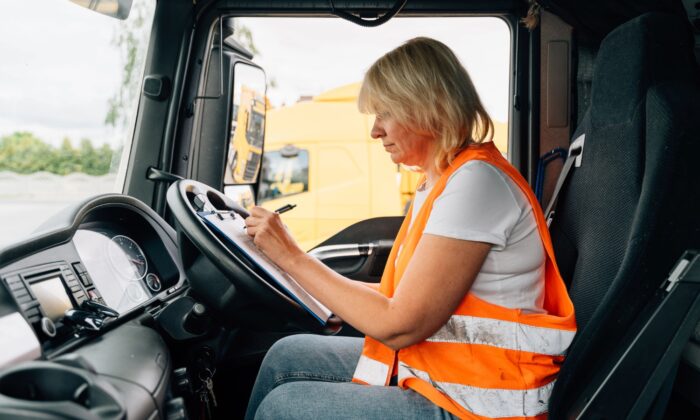
We worked on the project for seven months and during this time we carried out engagement, including interviewing people and running co-design workshops. We found it difficult to recruit to these: there was some stakeholder fatigue within some parts of the industry and it was at freight’s busiest time of the year due to the Christmas rush. However, we prevailed, and Daniela and Fiona held 22 interviews with a range of key stakeholders including bus and freight companies, membership organisations supporting the industry, and educators. Daniella’s team, Fiorella and Anika condensed this into documentary analysis, which sat alongside the literature review they’d already completed.
Following on from this phase of the project, we ran three co-design workshops with 17 participants where we used a systems thinking approach to. If you don’t know what systems thinking is, there’s a great summary on the UK government website. In short, we looked at complex problems and, by mapping out feedback loops and unintended consequences, we looked at the structural problem as a whole before mapping out solutions.
We have summarised our findings in our . What resonated most with me was that:
So, I may never be a lorry or a bus driver, but the project has highlighted to me the wide range of jobs available through the HDV sector and the value of diversifying the sector. It is often said that freight is the unsung hero of the road, and this project taught me the whole sector is a fundamental part of the economy which will continue to grow alongside our expectation for next day deliveries. As it electrifies, there is a real opportunity to diversity the workforce and ensure we are prepared for the freight expectations of the future.
Through this project, I found out some of the great work going on in the sector to raise the profile of the bus, coach and freight industries: bus driver campaigns, courses, and organisations supporting entry into the sector.
Interested in our findings? Take a look at our .
The project was funded by Transport Scotland’s Zero Emission Heavy Duty Vehicle Skills Challenge Fund.