SEStransit
Expanding and improving the public transport network in the South East of Scotland
 The South East of Scotland is undergoing major change. A growing population, shifting economic demands and the urgent need to respond to climate change are placing increasing pressure on our transport network.
To support our region’s future, expanding and improving our public transport network is essential. We need a reliable and well-connected system that helps people reach jobs, education and services, and strengthens local businesses by improving access for customers, suppliers and visitors. And better public transport connections across our region will help ensure that prosperity is shared more evenly between urban and rural communities.
We’re working with the eight local authorities in our region, along with the Edinburgh and South East of Scotland City Region Deal, Transport Scotland and Network Rail to develop a comprehensive and integrated public transport system across the region.
On this page you can read more about:
What is SEStransit?
 SEStransit is a strategic approach to a mass transit system that we’re currently developing for South East Scotland. Mass transit can involve a wide range of public transport options and includes how people move from one type of public transport or active travel to another. Read more about the types of public transport options SEStransit could include further down this page.
SEStransit will provide a coordinated, regional approach to transport planning across South East Scotland, recognising that the benefits of an integrated transport network are greater than the sum of individual components.
In the short term, we are developing an overarching Strategic Business Case to demonstrate that there is a compelling case for change that aligns with the region’s long term economic vision. You can read more about this further down this page.
Ultimately, SEStransit will establish a clear long-term investment programme for the region, providing a strategic pipeline of transport projects to guide decision-making and investment over the next 20 to 30 years. It will transform regional connectivity, improve access to employment, education and essential services, and support sustainable economic growth across South East Scotland.
SEStransit governance
We have established a SEStransit Programme Board made up of senior officers from each of the eight local authorities in our region, along with Network Rail. A senior officer from Transport Scotland also sits on this board as an advisor.
The role of this board is to:
- Confirm the ongoing support of their respective organisations, by ensuring senior office representation and councillor buy-in
- Make applications (or joint applications where appropriate) for external funding to assist the SEStransit programme or individual projects, with SEStran taking the co-ordination lead
- Approve the scope of the Strategic Business Case
- Approve the Case for Investment by the end of October 2026 (the Case for Investment is an important part of the Strategic Business Case)
- Decide on process to be followed once the Strategic Business Case has been approved
- Approve the Strategic Business Case by autumn 2027
Read the Terms of for the SEStransit Programme Board
SEStran’s main policy and budgetary decisions are taken by our Partnership Board, consisting of 20 councillors – representing all eight of our partner local authorities – and nine non-councillor members, who come from a range of backgrounds and provide a wide range of expertise.
Why expand and improve public transport network in South East Scotland?
The population of the South East of Scotland is increasing rapidly, with four of Scotland’s five fastest growing local authority populations located in our region. For example, between 2022 and 2032, Midlothian’s population is projected to increase by 14.7%. This is the highest growth rate of any Scottish local authority. This population growth means our region will see more journeys for work, education and leisure. There are also new strategic development sites that incorporate housing and commercial, leisure and retail opportunities.
And this will all add pressure to a transport network that we know isn’t fit for dealing with current traffic levels. Private car use is the main cause of congestion on our roads. Congested roads not only result in only wasted time and lost productivity but also contribute significantly to air pollution and carbon emissions. Cars are also responsible for a significant number of deaths and serious injuries. A shift to public transport will reduce congestion, improve air quality and support improved health and wellbeing for everyone.
Accessible public transport is also a vital element of tackling social inclusion. For those who don’t have access to a car, public transport can be their only way to get to healthcare appointments, education, work or social activities. A better public transport system in our region will ensure residents, regardless of income, age, or ability, can travel affordably and conveniently.
By providing faster, more reliable, accessible and affordable public transport connections between communities and key economic centres, SEStransit will help reduce transport barriers, widen access to opportunities and contribute to efforts to tackle child poverty and inequalities.
It will also support the development of a more resilient and productive regional economy by improving labour market accessibility, unlocking development opportunities and strengthening links between people, places and businesses. In doing so, SEStransit will support the delivery of Scottish Government priorities alongside regional objectives for inclusive growth, sustainable development, improved social outcomes and a just transition to net zero.
How does SEStransit fit into national and regional transport priorities?
In early 2020, Transport Scotland published their National Transport Strategy 2. This set out their vision for Scotland’s transport system for the next 20 years. To deliver the vision, priorities and outcomes in this strategy, Transport Scotland published the Strategic Transport Projects Review 2 in 2022.
This set out evidence-led recommendations designed to inform transport investment for the next 20 years. Recommendation 12 of the Strategic Transport Projects Review 2 is for an Edinburgh and South East Scotland mass transit system.
In order to provide a framework and direction for transport in South East Scotland, SEStran is required to produce a Regional Transport Strategy in partnership with the eight local authorities in our region. The Regional Transport Strategy aligns closely with National Transport Strategy 2 and was approved by Scottish Ministers in 2023. It is supported by the Regional Transport Strategy Delivery Plan which will be finalised in the current financial year. Work to date on the Regional Transport Strategy Delivery Plan has identified six key themes, including mass transit.
At a Regional Transport Strategy Delivery Plan steering group meeting in 2025, it was agreed that Recommendation 12 from Strategic Transport Projects Review 2 and the mass transit theme from the Regional Transport Strategy Delivery Plan should be merged into one programme. This became SEStransit.
How are we developing SEStransit?
It is important that SEStransit is developed using a robust and recognised process, so we are following the Scottish Transport Appraisal Guidance (STAG). We are currently working on the Strategic Business Case to set out a compelling case for change, and this will be completed in Autumn 2027.
The SEStransit Strategic Business Case will be evidence led. We will analyse travel patterns across the region to identify the key travel routes and connections required to get people where they want to go as quickly and efficiently as possible.
Once the Strategic Business is agreed, the next stage is to develop an Outline Business Case, which builds on the Strategic Business Case in much greater detail. While the Strategic Business Case is being completed, the SEStransit Programme Board will decide whether a single Outline Business Case is needed for the whole SEStransit programme, or whether separate Outline Business Cases should be prepared for each route or connection. In most cases, these individual route and connection projects would be taken forward by the relevant local authority or authorities.
In some cases, the Outline Business Case for a particular route/connection will already have been completed as part of other work carried out within one of our region’s local authorities. In these cases, the Outline Business Case will be checked to make sure that it’s still current and that any assumptions are still valid.
Key routes and types of transport projects
The Strategic Business Case will be evidence led, analysing travel patterns across the region to identify the key routes and connections required to get people where they want to go as quickly and efficiently as possible.
SEStransit is a regional project and will consider transport demand across the whole of South East Scotland. Until demand has been assessed, it is not possible to predict which routes and connections will be included. However, SEStransit will consider heavy rail, light rail (trams and tram-trains), bus, transport connections, and the use of AI and data to transform the transport network.
Depending on the progress of Outline Business Cases arising from the Strategic Business Case, potential projects could include:
- Improving rail services, adding new stations/stops and improving connections with other types of transport (such as cycling)
- Extending the existing tram system in Edinburgh, potentially into neighbouring council areas, or adding tram-trains to the public transport mix in Edinburgh
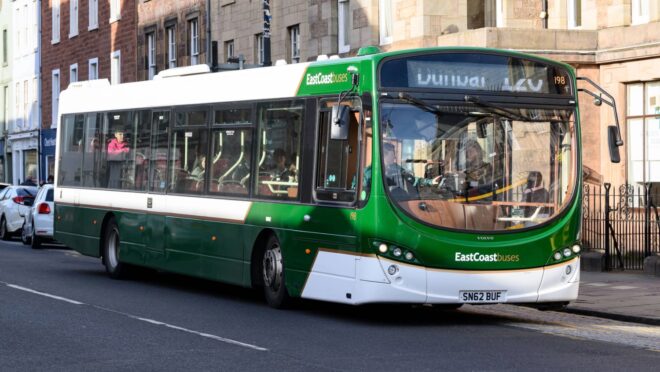
- Bus Rapid Transit – these are a type of high-capacity buses that could run along routes that are currently very congested with cars
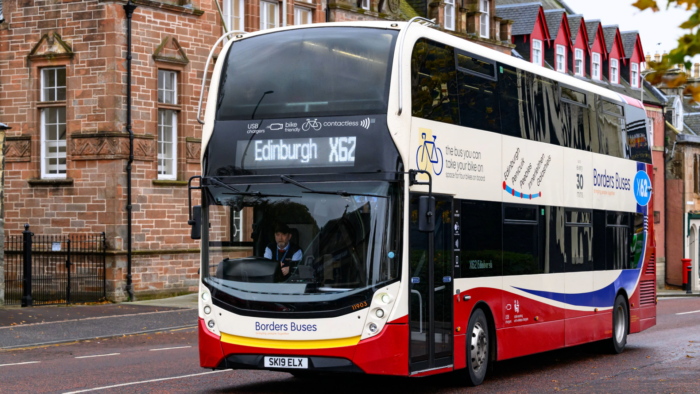
- Strategic bus routes that link people with trains, trams, tram-trains or Bus Rapid Transit
- Mobility hubs which bring different transport options together – for example a bus stop, train station and cycle parking together in the same location
- Integrated ticketing concepts to allow multiple parts of a journey to be purchased together (for example, a ticket that covers two different buses on the same journey, or that covers a train and a bus as part of the same journey)
- Improving first/last mile active travel connections (for example, covered cycle parking near a bus or train station to allow cycling to and from that location, potentially with charging stations for eBikes)
- Strategic infrastructure improvements to support passenger transport solutions and reduce the impact of congestion
How can I have my say on SEStransit?
We are working closely with key partner organisations across our region including all eight local authorities, Network Rail, the City Region and Growth Deal areas and Transport Scotland. As our work progresses, we will also be carrying out stakeholder engagement to ensure that we capture and take on board a wide range of perspectives and views. We will provide more information about this and how to get involved when we are at this stage.