

In April, Ewan Doyle joined our team as Senior Partnership Manager. Ewan came to us from the Edinburgh and South East Scotland City Region Deal, where he was leading the Workforce Mobility Project. In this blog, Ewan explains more about the Workforce Mobility Project and how analysing travel times and behaviour can help support better travel solutions, leading to more inclusive and accessible workplaces.
The Workforce Mobility Project focuses on how and when people travel to work, and how this aligns with our current public transport options. By analysing travel demand, journey times, workforce distribution and shift patterns, we can build a clearer evidence base to inform better transport and workforce decisions.
At its core, this work is about equity. When transport does not reflect how people live and work, it means that opportunities can be out of reach for individuals, employers and communities.
A key strength of the project is how it turns data into practical insight. By combining traditional transport data with new sources such as mobile phone and employer data, we can see hidden gaps, particularly for those travelling outside standard commuting hours or across local authority boundaries.
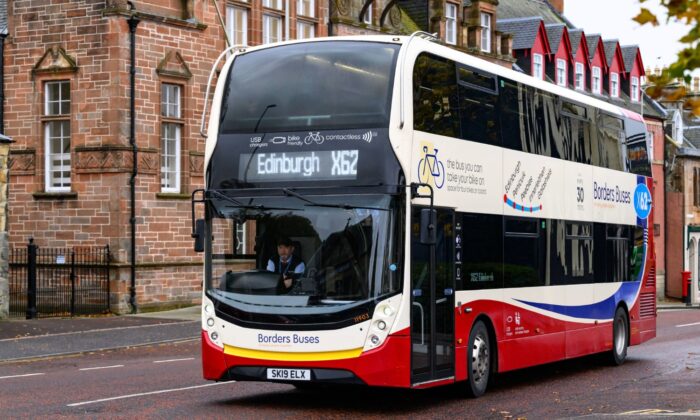 This approach has already been applied by Scottish Borders Council through their . By comparing real travel demand with existing services, the review identified clear opportunities to improve how the network operates, including:
The Workforce Mobility Project allowed Scottish Borders Council to get a more sophisticated understanding of when and where people need to travel, allowing services to be redesigned around real journeys. The review also reinforced the wider value of the bus network, demonstrating its significant economic and social contribution to the region
The Workforce Mobility Project also used same data-led approach to work with – an example of a complex, 24/7 employment site. The analysis showed that the biggest challenges are often not distance, but whether public transport runs at the right times and connects properly. When services don’t align with shift patterns, journeys can become long and complicated, or in some cases not possible at all without a car.
To help address this, the project team looked at how easy it is to get to the airport by public transport for the current working patterns, alongside reviewing data on where people live and areas most in need of employment opportunities. This provided a clearer picture of who can realistically access jobs at the airport, helping to shape future recruitment and ensure it better reflects the public transport network
The value of the Workforce Mobility Project lies in moving beyond insight into action. It is already informing discussions with operators, helping align services to demand, improving connections, and supporting employers to better understand how their workforce travels.
The insights are strengthening the evidence base for investment and supporting the delivery of our Regional Transport Strategy and the Edinburgh & Southeast Scotland City Region Deal’s Regional Prosperity Framework, by ensuring decisions are grounded in real travel behaviour.
Ultimately, the aim is simple: no one should be excluded from work, training or opportunity because of how our transport system operates. By aligning public transport more closely with how people actually live and work, we can create a more inclusive, efficient and connected region.